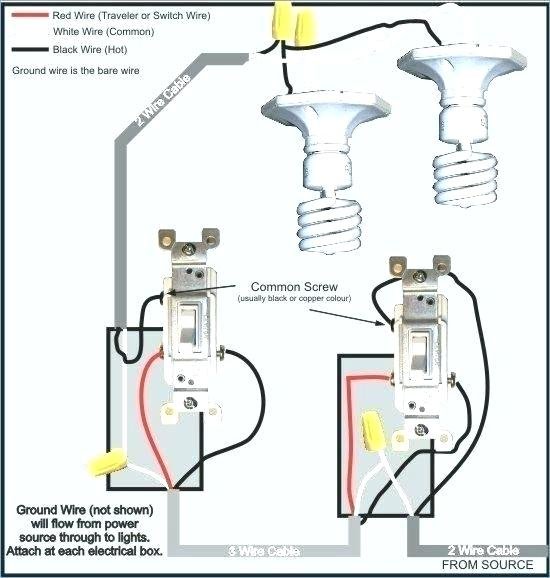
There’s a special kind of frustration that comes with a 3-way light switch system that just won’t behave. You flip a switch, nothing happens. You try the other switch, still nothing. Or maybe it works sometimes, but not always. If you're grappling with troubleshooting 3-way switch wiring problems in your home, you're not alone. These systems are notoriously more complex than a standard on/off switch, making diagnosis feel like solving a riddle in the dark.
The reality is, a simple 2-switch, 3-way system has a surprising 1 in 9 possible wiring configurations that will actually work. Add a 4-way switch into the mix, and the odds worsen dramatically, becoming three times harder with each additional switch. This isn't just a quirky design; it's a carefully engineered dance of "hotness" through multiple paths. But when the dance goes wrong, it can bring your lighting to a standstill.
This guide will demystify the complexities, giving you a clear, actionable roadmap to diagnose and fix your stubborn 3-way switch issues. We’ll move beyond guesswork, equipping you with the knowledge and steps to restore light and order to your home.
At a Glance: Key Takeaways for 3-Way Switch Troubleshooting
- Complexity is Normal: 3-way switch wiring is intricate. Don't be discouraged by initial confusion.
- Safety First: Always turn off power at the breaker before working on electrical components.
- Identify the "Hot End": One 3-way switch receives the constant hot wire from your electrical panel. Finding this is crucial for diagnosis.
- Travelers are Key: Two dedicated "traveler" wires shuttle "hotness" between switches, allowing control from multiple locations. They are always in the same cable.
- Common Terminal is Special: On the hot-end switch, it connects to the incoming hot. On the leg-end switch, it connects to the light.
- Test Without Disconnecting: A neon tester can pinpoint problems by tracing where hotness is present or absent, often without needing to remove wires.
- Loose Connections are Common: Often, the problem isn't a faulty switch but a wire that has come loose over time.
- When Replacing: Always note original wire positions, and remember the "foolproof" method: travelers go to the two same-colored screws.
Understanding the Dance: How 3-Way Switches Really Work
Before we dive into what's broken, let's quickly review how a healthy 3-way system functions. Imagine you have a light fixture in your hallway controlled by two switches, one at each end. This is the classic 3-way setup.
Instead of simply breaking a circuit like a standard on/off switch, 3-way switches redirect the flow of electricity, or "hotness," along two alternate paths. These paths are created by a pair of wires called travelers.
- The "Hot End" Switch: This is where the constant hot wire (the live power coming from your electrical panel) first enters the system. Its common terminal connects directly to this incoming hot wire.
- The "Leg End" Switch: This is the switch closest to the light fixture. Its common terminal connects to the "switched leg" wire that runs directly to the light(s).
- Travelers: Two wires, typically black and white, or black and red, connect the two 3-way switches. They act as a two-lane highway, carrying hotness from the hot-end switch to the leg-end switch, depending on the switches' positions. Crucially, these traveler wires are always contained within the same cable running between switch boxes.
- 4-Way Switches (When Present): If you have three or more switches controlling the same light, you'll have one or more 4-way switches in the middle. These switches have four terminals and simply intercept and reroute both traveler wires, passing hotness from one pair of travelers to another pair. They're like traffic cops for your traveler wires, sitting between the initial and final 3-way switches.
The "common" terminal on any 3-way switch is distinct. It's never for the two travelers. At the hot end, it's for the incoming hot. At the leg end, it's for the wire going to the light. This fundamental understanding is your first step in how to wire a 3-way switch correctly and, consequently, how to troubleshoot it.
Why 3-Way Switches Are Tricky: The Complexity Factor
You might wonder why such a seemingly simple task – controlling a light from two spots – requires such a convoluted wiring scheme. The complexity stems from the need to maintain power flow to the light regardless of which switch is toggled. Each switch essentially acts as a gate, directing electricity down one of two traveler wires. For the light to turn on, both gates must be aligned. If one is open and the other closed, the circuit is broken.
Consider this: In a 2-switch, 3-way system, there are 9 different ways the wires could be connected, but only 1 of them will actually work correctly. This immediately tells you that simply swapping a switch or reattaching a wire without understanding the system is a high-stakes gamble. When you introduce a 4-way switch, that complexity triples. Each additional 4-way switch in the system multiplies the challenge by a factor of three. This isn't meant to intimidate you, but to illustrate why a systematic approach to diagnosing 3-way switch problems is so vital.
Spotting the Usual Suspects: Common 3-Way Switch Problems
Most 3-way switch woes boil down to a few typical culprits:
- A Switch Itself Fails: Mechanical components wear out. A toggle might feel "loose," or internal contacts might corrode or break, preventing the switch from properly directing hotness.
- A Wire Connection Becomes Loose: This is incredibly common. Over time, vibrations, temperature changes, or even just the act of stuffing wires back into a box can loosen a screw terminal connection. A loose wire might make intermittent contact, leading to lights flickering or working inconsistently.
- Incorrect Wiring (Often Post-Replacement): If someone recently worked on the switch – perhaps replacing it or another switch in the system – and the problem started afterward, improper wiring is the prime suspect. This can involve mixing up traveler wires with the common wire, or failing to properly identify the hot and leg ends.
- Installing the Wrong Type of Switch: Accidentally replacing a 3-way switch with a standard 2-terminal on/off switch will definitely cause problems, as the 2-terminal switch lacks the necessary internal components and traveler connections.
- A Breaker Trip: While not directly a switch problem, a tripped circuit breaker can certainly make it seem like your 3-way system isn't working. Always check your electrical panel.
Before You Grab Your Screwdriver: Safety First!
Before you touch any wires, tools, or even open a switch plate, you must prioritize safety. Electricity is unforgiving.
- Turn Off the Power: Go to your electrical panel (breaker box) and locate the breaker that controls the circuit for your problematic light. Flip it to the "OFF" position. Don't assume the light is off means the power is off.
- Verify Power is Off: Use a non-contact voltage tester (NCVT) or a multimeter to confirm that no power is flowing to the switches or light fixture. Test various wires and terminals inside the switch box.
- Gather Your Tools: Having the right tools at hand not only makes the job easier but also safer.
Following these essential electrical safety tips will protect you from shock and prevent damage to your home’s electrical system.
Your Troubleshooting Toolkit
You don't need a professional electrician's arsenal, but a few key tools will make diagnosing your 3-way switch problems much more effective and safer.
- Neon Tester: This simple, inexpensive tool is invaluable for tracing hotness without disconnecting wires. It has two prongs and lights up when it detects voltage.
- Non-Contact Voltage Tester (NCVT): A pen-shaped device that beeps or lights up when it senses AC voltage without direct contact. Great for quickly checking if a wire is live.
- Multimeter: More versatile than a neon tester, a multimeter can measure voltage, continuity, and resistance, offering a deeper diagnostic capability if you know how to use it. If you're looking for the right electrical tester for the job, a multimeter is often the gold standard.
- Screwdrivers: Flathead and Phillips head, insulated handles are a plus.
- Wire Strippers/Cutters: If you need to make new connections.
- Electrical Tape: For temporarily securing wires or marking.
The Diagnostic Walkthrough: Step-by-Step Troubleshooting (Without Disconnecting Wires)
This is where the magic happens. By systematically testing for "hotness," you can pinpoint exactly where the electrical flow is being interrupted. Remember, the goal here is to diagnose, not necessarily to immediately fix.
Step 1: Identify the "Hot End" Switch
The first critical step is to find the 3-way switch that receives the constant hot wire from your circuit. This is your "hot end" switch.
- Ensure Power is ON (Carefully!): For this diagnostic step, you must have the power on at the breaker. Exercise extreme caution.
- Remove Switch Plates: Carefully remove the cover plates from both 3-way switches in your system. Do not touch any wires yet.
- Locate Common Terminals: Each 3-way switch has three screw terminals. Two are usually the same color (often brass or silver) for the travelers, and one is a different color (often black or dark bronze) for the common. Identify the common terminal on each switch.
- Test the Common Terminals: Take your neon tester. Touch one prong to the common terminal screw of the first 3-way switch. Touch the other prong to a known ground (e.g., the bare copper ground wire in the box, or the metal box itself if it's grounded).
- Observe:
- If the tester lights up regardless of all switch positions: Congratulations, you've found your "hot end" switch! This common terminal is connected to the incoming constant hot wire. This is your starting point.
- If it only lights up sometimes or not at all: This is likely the "leg end" switch (the one connected to the light), or there's a problem earlier in the circuit. Move to the other 3-way switch and repeat the test.
Once you've identified the hot-end switch, turn the power off at the breaker again before proceeding to the next step or if you need to physically manipulate wires.
Step 2: Trace the "Hotness" Through the Travelers
With the hot-end switch identified, you can now trace the path of electricity to see where it breaks down.
- Turn Power ON (Cautiously): Again, power must be on for this diagnostic.
- Go to the Hot-End Switch:
- Ensure the hot-end switch is in a position where hotness is sent down one of the travelers. You'll need to try both traveler positions.
- Using your neon tester, touch one prong to the common terminal (which should be continuously hot).
- Then, touch the other prong, one at a time, to the two traveler terminals. One of them should light up the tester. This indicates hotness is leaving the common and going down that specific traveler wire.
- Move to the Next Switch (Leg-End or 4-Way):
- Go to the other 3-way switch (the leg-end switch) or the first 4-way switch if you have one.
- With the power on, carefully test the two incoming traveler wires (the ones coming from the hot-end switch). Remember, travelers are always in the same cable.
- If a traveler wire is hot: This means power is successfully making it to this point. Now, manipulate this switch's position and test its outgoing traveler wires (if it's a 4-way) or its common terminal (if it's the leg-end 3-way).
- If neither traveler wire is hot (at the next switch), but one was hot at the hot-end switch: This points to a problem with the traveler wires themselves (break, loose connection in-between) or a problem with the hot-end switch failing to pass hotness correctly.
Step 3: Pinpoint the Failure
By systematically following the flow of hotness, you can isolate the problem.
- Scenario A: Hotness reaches the leg-end switch's travelers, but not its common terminal (to the light).
- This indicates the leg-end 3-way switch itself is bad, or its common terminal connection to the light-leg wire is loose.
- Scenario B: Hotness leaves the hot-end switch on a traveler, but doesn't arrive at the next switch's corresponding traveler.
- This suggests a break in that traveler wire, or a loose connection between the switches. Less common, but possible.
- Scenario C: Hotness doesn't even leave the hot-end common terminal, or it's intermittent.
- The problem is likely with the incoming hot wire connection to the hot-end switch's common terminal, or the hot-end switch itself is faulty.
- Scenario D: If you have 4-way switches. You follow the same principle: Ensure hotness enters the 4-way switch on one pair of travelers, and then test if it leaves on the other pair of travelers as you toggle the 4-way switch. If hotness enters but doesn't leave, that 4-way switch is likely the problem, or its connections are loose.
Mini-Case Example: Imagine your hot-end switch (Switch A) has a constantly hot common. You toggle Switch A, and the tester lights up on its black traveler wire. You move to the leg-end switch (Switch B). You test the black and white travelers entering Switch B. If the black traveler at Switch B is NOT hot, even when it was hot at Switch A, then your issue is either a broken black traveler wire between Switch A and B, or a loose connection at Switch A for that black traveler. If the black traveler at Switch B IS hot, but the light still doesn't work, you then test Switch B's common terminal. If it's not hot (when it should be), then Switch B or its connection to the light-leg wire is the problem.
Once you've identified the general area of the problem, turn off the power at the breaker before physically manipulating any wires or removing switches.
Decoding Wire Colors: What Goes Where
Understanding wire colors is paramount in electrical work, especially in 3-way switch systems where wires can serve multiple functions. While colors offer general guidelines, remember that local code requirements or previous DIY work might mean white wires are not neutrals. When in doubt, always test.
Here’s a breakdown of commonly found wire colors in 3-way switch boxes:
| Wire Color | Typical Function | Notes |
|---|---|---|
| Black | Incoming constant hot wire (at hot-end common) | Most common color for hot wires. Can also be a traveler or the switched leg to the light. |
| Red | Traveler wire | Often used as one of the two traveler wires in a 3-wire cable (alongside black and white). Can also be a hot wire. |
| White | Neutral wire | Usually bundled together in the back of the box, never connected to a switch terminal (unless re-marked). Crucially, white wires can be re-marked (with black or red electrical tape) to serve as travelers or hot-end hots if used as such in a multi-conductor cable. |
| Bare Copper/Green | Grounding wire | Connects to each other, to the electrical box (if metal), and to the switch's green grounding screw. Essential for safety. |
| Important Reminders: |
- Travelers are a Pair: The two travelers are always contained within the same cable between switch boxes. You won't find one traveler from one cable and another from a different cable.
- Neutral Bundle: Most other white wires you see in switch boxes will be neutrals, connected to each other, often with a wire nut. These should not be connected to any switch terminals in a standard 3-way setup.
- Re-Marked Wires: Electrical code often requires white wires used as travelers or hot wires to be re-marked (e.g., with black electrical tape near the ends) to indicate they are no longer functioning as neutrals. If you see a white wire with black tape, treat it as a hot wire.
Understanding these color conventions (and their exceptions) is a key part of the basics of your home's electrical system and simplifies the task of identifying which wire does what.
Replacing a Faulty 3-Way Switch? Do It Right.
If your troubleshooting points to a faulty switch, replacement is straightforward if you're careful. This is where many DIYers run into trouble, often due to incorrect wiring during the swap.
- Power OFF: Absolutely crucial. Verify with your NCVT.
- Document Everything: Before you disconnect a single wire, take a photo (or several!) of the existing wiring. Note which wire connects to which screw terminal (especially the common). You can also use painter's tape to label each wire.
- Remove the Old Switch: Loosen the screw terminals and detach the wires.
- Confirm 3-Way Type: Ensure your new switch is, in fact, a 3-way switch. It will have three screw terminals (plus a green ground screw). A standard 2-way switch only has two (plus ground) and will not work.
- The Foolproof Connection Method (for Travelers):
- When you look at your new 3-way switch, you'll notice two screw terminals are the same color (often brass or silver). These are for your traveler wires.
- The remaining single screw terminal (often black or dark bronze) is for your common wire.
- Rule: Attach the two traveler wires to the two same-colored screws.
- Rule: Attach the remaining wire (which will be either the incoming hot at the hot end, or the switched leg to the light at the leg end) to the odd-colored common screw.
- Decorator vs. Toggle Switches: Be aware that "decorator" or "rocker" style switches might have their terminal locations arranged differently than traditional toggle switches. Always refer to the instructions provided with your new switch and verify which terminals are for travelers and which is common.
- Grounding: Always connect the bare copper or green ground wire to the green grounding screw on the new switch.
- Mount and Test: Carefully fold the wires back into the box, mount the switch, replace the cover plate, and then turn the power back on at the breaker to test.
If you want a detailed, step-by-step visual, check out our guide on how to wire a 3-way switch for comprehensive instructions.
Understanding Your 3-Way System's Layouts
While the internal workings of a 3-way switch are consistent, the physical path the wires take can vary significantly based on how your home was wired. This is why troubleshooting relies more on electrical principles (tracing hotness) than on matching exact physical layouts.
The basic arrangements are:
- Classic 3-Way:
--- S === S --- O(S = Switch, O = Light, lines = wires carrying hotness). Hot power enters the first 3-way switch (S), travels between the two switches (===) via the travelers, and then the final 3-way switch (S) sends the switched hotness to the light (O). - With 4-Way Switches:
--- S === S === S --- Oor--- S === S === S === S --- O, etc. Here, 4-way switches are interposed between the two 3-way switches. They connect incoming and outgoing traveler pairs. You can have any number of 4-way switches in the middle.
Variations on these themes often involve: - Splicing through other boxes: Sometimes, for convenience or due to cable conductor count, wires might run through a junction box or even a light fixture box before reaching their final destination.
- Circuit Approach: The constant hot might come into the light fixture box first, then travel to the switches, or vice-versa.
- Cable Conductor Count: Electricians might choose to use 3-wire cable (black, white, red, ground) or multiple 2-wire cables (black, white, ground) to achieve the necessary connections, leading to different wire arrangements within boxes.
The key takeaway is that despite these variations, the core requirements remain: a constant hot at one switch, travelers between the switches, a switched leg to the light, and a neutral at the light box. The troubleshooting method described earlier, tracing hotness, bypasses the need to perfectly "map" these complex physical layouts.
When It's Not a Simple Fix: Understanding More Complex Scenarios
Sometimes, the problem isn't a loose wire or a bad switch. Here are a few less common, but important, considerations:
- "Rare" or Abnormal Systems: Be aware that a few "abnormal" 3-way systems exist (sometimes called "California" or "Hollywood" wiring). One such system is illegal and dangerous, where a hot wire is permanently attached to one traveler and a neutral to the other. Our troubleshooting advice does not apply to these systems. If your wiring deviates significantly from the standard setup described (e.g., neutrals connected directly to switch terminals, or a constantly hot traveler), it's best to call a qualified electrician. Such systems can pose a shock hazard.
- The Light Fixture Itself: Don't overlook the obvious! Is the light bulb burnt out? Is the socket faulty? Test the light fixture directly if you're certain power is reaching it.
- Breaker Issues: While you checked for a tripped breaker, sometimes a breaker can be "weak" or faulty, tripping prematurely or not resetting properly. If you suspect this, consult an electrician.
- Damaged Wiring Inside Walls: Less common but possible, rodents can chew through wires, or nails/screws can accidentally pierce them during renovations. If your troubleshooting points to an open circuit within a wall, this is definitely a job for a professional.
- Overloaded Circuit: If your lights consistently dim or flicker before failing, especially when other appliances turn on, you might have an overloaded circuit. This isn't a 3-way switch problem but a fundamental issue with common electrical code violations or your home's electrical capacity.
Advanced Considerations & Best Practices
As you gain confidence in troubleshooting, here are some further points to keep in mind:
- Consider Upgrades: If you're frequently having issues with older switches, or if you're replacing multiple switches, consider upgrading to smart switches. Many smart switches are designed to work in 3-way configurations and can offer additional features like dimming, scheduling, and voice control. However, they still rely on correctly wired underlying systems.
- Regular Inspections: Periodically (e.g., every few years) tightening screw terminals in your switch boxes can prevent many common loose connection problems. Always do this with the power off!
- When to Call a Pro: Don't hesitate to call a licensed electrician if:
- You're uncomfortable at any point during the troubleshooting process.
- Your diagnostic steps lead to more confusion than clarity.
- You suspect illegal or dangerous wiring.
- You're dealing with issues beyond the switch (e.g., sparks, burning smells, frequent breaker trips).
- You need to open up walls to trace wires.
Empowering Your Next Steps
Diagnosing and fixing 3-way switch wiring problems might seem daunting, but by systematically approaching the issue, understanding the system's logic, and prioritizing safety, you can often resolve these frustrating electrical glitches yourself.
Start by confidently identifying your "hot end" switch, then trace the path of electricity through your system. Most issues are resolved by simply tightening a loose connection or replacing a faulty switch with proper attention to how the wires connect to the common and traveler terminals.
With the knowledge from this guide, you're not just fixing a light; you're gaining a deeper understanding of your home's electrical heart. And that's a powerful tool in any homeowner's arsenal.